
CROSSINGS
From Baroque Europe to South America
CROSSINGS
From Baroque Europe to South America
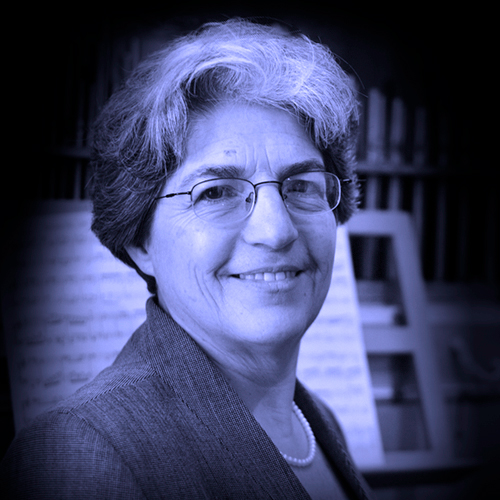
Elisa Freixo
organ
OCT 17th
9:30 p.m.
Machico, Igreja de Nossa Senhora da Conceição
Programme:
Sebastian Aguilera de Heredia
(1561-1627)
¬ Salve Regina
Abraham van den Kerckhoven
(1618-1701)
¬ Fantasia
Alessandro Scarlatti (1660-1725)
¬ Toccata in A major
› Allegro
› Presto
› Partita alla lombarda
› Fuga
Carlos Seixas (1704-1742)
¬ Organ sonata in G major
Domenico Scarlatti (1685-1757)
¬ Sonata in D minor K 517
Anónimo Anonymous
(Chiquitos, Bolívia, 17th c.)
¬ Toccata
¬ Folias
João Wilson Faustini (1931-2023)
¬ Currupio
Leo Schneider (1910-1978)
¬ Caixinha de música
Marcos Portugal (1762-1830)
¬ Organ sonata in D major
Sebastian Aguilera de Heredia
¬ Tiento de batalla
The history of music is also a history of journeys. Composers, manuscripts, instruments, and ideas have been crossing borders for centuries, accompanying the political, religious, and cultural transformations of the Western world. Few places symbolise this movement as eloquently as Madeira Island. Located on the great Atlantic routes, it was a starting point for countless expeditions and became a privileged space for circulation between Europe, Africa, and America. This programme proposes a musical journey across different eras and regions, revealing how the organ tradition was built through dialogue between cultures. The journey begins in the Iberian Peninsula at the end of the Renaissance, with two pieces by Sebastián Aguilera de Heredia, one of the great masters of the Spanish organ. The solemn Salve Regina opens the concert in a mood of contemplation, while the exuberant Tiento de batalla, presented at the end, concludes the journey with extraordinary energy. Between these two extremes, unfolds a broad historical and musical arc. Abraham van den Kerckhoven's Fantasia represents the important organ tradition of the Spanish Netherlands. Its contrapuntal writing demonstrates the refinement achieved by a school that influenced much of Europe. Next, Joseph de Torres brings the listener closer to the Spanish musical environment of the early 18th century. Alessandro Scarlatti's monumental Toccata marks this moment of aesthetic renewal. Alternating moments of great brilliance, virtuosic passages, an elegant Partita alla lombarda, and a concluding fugue, this piece reveals the extraordinary richness of the Italian Baroque language. Carlos Seixas and Domenico Scarlatti, in turn, represent one of the most fascinating chapters in Portuguese musical history. The coexistence of the two musicians in Lisbon produced an intense artistic exchange, evident in the formal freedom, melodic elegance, and inventiveness of their keyboard sonatas. In the second part of this programme, the journey reaches South America. The Toccata and Folías, preserved in the manuscripts of the Chiquitos Missions, present-day Bolivia, belong to a repertoire that remained unknown for centuries. Rediscovered only in the second half of the 20th century, these works bear witness to the flourishing of an intense musical life in the Jesuit reductions, where indigenous and European musicians shared knowledge and built a unique artistic tradition. Brazilian creation is represented by two works of great character. In Currupio, João Wilson Faustini draws inspiration from the legendary figure Curupira to create a writing of strong rhythmic and expressive imagination, bringing the organ's universe closer to the richness of Brazilian popular culture. Meanwhile, Caixinha de música, by Leo Schneider, reveals another side of national production: delicate writing of refined sensitivity. The presence of Marcos Portugal establishes a direct link between Portugal and Brazil. An important figure in Luso-Brazilian musical life between the late 18th and early 19th centuries, his work symbolises an era in which repertoires, musicians, and ideas circulated intensely between the two sides of the Atlantic. More than presenting a historical overview, Travessias (Crossings) seeks to reveal how music transforms itself when crossing borders. For over four centuries, the organ remains a privileged witness to these movements, preserving memories and building relationships between continents.
Elisa Freixo
