
FROM THE ISLAND TO THE HORIZON
FROM THE ISLAND TO THE HORIZON
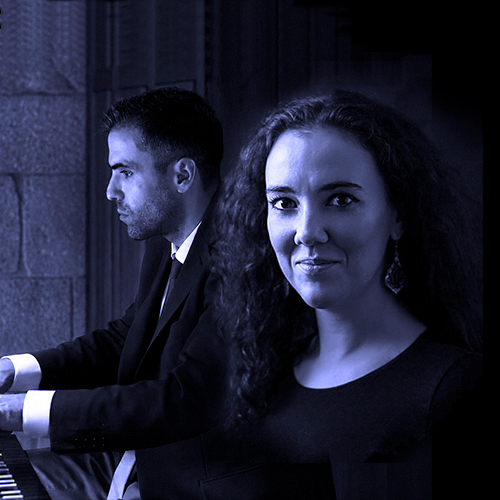
Gregório Gomes
organ
Ana dos Santos
mezzo-soprano
OCT 20th
9:00 p.m.
Funchal, Igreja de Santa Luzia
Programme:
I. The Island
Johann Sebastian Bach (1685–1750)
¬ Toccata in C minor, BWV 911
Henry Purcell (1659–1695)
¬ Fairest Isle
Roger Quilter (1877-1953)
¬ Go, Lovely Rose, Op. 24, n.º 3
II. Silence and Interiority
Henry Purcell
¬ O Solitude
Richard Prizeman (1953)
¬ Ave Maria
John Stanley (1712-1786)
¬ Voluntary in D minor, Op. 5, n.º 8
III. Life and Hope
Joseph Haydn (1732–1809)
¬ With verdure clad the fields appear
(Die Schöpfung, English version)
Georg Friedrich Haendel (1685-1759)
¬ O thou that tellest good tidings to Zion
Samuel Barber (1910-1981)
¬ Sure on This Shining Night, Op. 13, n.º 3
Sigfrid Karg-Elert (1877–1933)
¬ Humoreske, Op. 101, n.º 7
IV. The Horizon
Charles Villiers Stanford (1852-1924)
¬ Crossing the Bar
Conceived to mark the 50th anniversary of Madeira's autonomy, this programme brings together works from different eras and countries, united by a common thread: the Island's identity, its relationship with the Atlantic, and its vocation as a meeting point for cultures. Without attempting to chronologically illustrate Madeira's history, the concert proposes a journey that begins with contemplation of the island, through moments of introspection and celebration, and ends by evoking the horizon, a symbol of Madeiran travels and the diaspora.
The opening with the Toccata in c minor, BWV 911, by Johann Sebastian Bach, establishes an atmosphere of solemnity and affirmation. The choice of Bach goes beyond his central position in the history of Western music. His work synthesises the main European musical currents of the Baroque period, bringing together German, Italian, and French influences in a language of extraordinary balance. Just as Madeira established itself as a meeting point between peoples and cultures in the Atlantic, Bach also brought together different musical traditions in a universal language that became the foundation of Western music. His presence symbolises the roots upon which the concert's journey rests. Henry Purcell also holds particular significance. In Fairest Isle, the island is presented as a place of beauty and identity, allowing for an immediate association with Madeira. O Solitude introduces a moment of contemplation and serenity, evoking the most intimate dimension of the island experience. Purcell's presence establishes a connection with the English musical tradition, appropriate to the organ used in this recital. The presence of Roger Quilter, also an English composer, reinforces this aesthetic continuity. In Go, Lovely Rose, the image of the flower evokes the richness of Madeira's flora and landscape, elements at the origin of the designation "Garden Island". The following section brings together works that reflect the spiritual and celebratory dimension of Madeiran identity. Richard Prizeman's Ave Maria recalls the importance of religious tradition in the archipelago's culture. John Stanley's Voluntary in d minor is one of the most representative examples of English organ literature, highlighting the instrument and reinforcing the presence of British tradition. The third part focuses on the celebration of life, nature, and hope. In With verdure clad the fields appear, Joseph Haydn presents nature as a symbol of abundance and renewal, associated with the rich landscape of Madeira. Georg Friedrich Händel's Rejoice greatly adds a jubilant character, appropriate to the celebrations of Autonomy. Sigfrid Karg-Elert's Humoreske introduces a moment of instrumental lightness before Samuel Barber's Sure on This Shining Night, evoking the United States of America, one of the main destinations for Madeiran emigration. The concert ends with Charles Villiers Stanford's Crossing the Bar, based on the poem by Alfred, Lord Tennyson. The sea crossing becomes a metaphor for departure, courage in the face of the unknown, and hope for reunion. In conclusion, this work summarises Madeira's Atlantic calling and reminds us that the sea, more than a border, constituted a space of connection between the island and the world. From the Island to the Horizon asserts itself as a musical tribute to Madeiran identity, celebrating its culture, openness to the outside world, and the preservation of its roots.
Gregório Gomes
