
CORREA DE ARAUXO, FACULTAD ORGANICA (1626)
CORREA DE ARAUXO, FACULTAD ORGANICA (1626)
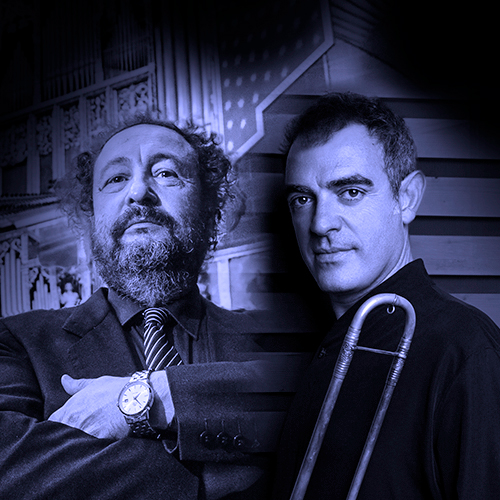
Javier Artigas
organ
Simeón Galduf
sackbutt
OCT 22nd
9:30 p.m.
Funchal, Igreja do Convento de Santa Clara
Programme:
Francisco Correa de Arauxo (1583-1654)
¬ Tiento de quinto tono, fa, (y fa en quinta) por fefaut, del genero diatonico
Diego Ortiz (1510-1570)
¬ Dos recercadas sobre tenores italianos
Antonio Valente (c.1520-1601)
¬ La Romanesca con cinque mutanze
¬ Bassa fiamingha
¬ Lo ballo dell’intorcia con sette mutanze
Diego Ortiz (1510-1570)
¬ Dos recercadas, sobre la folía y el pasamezzo moderno
Francisco Correa de Arauxo
¬ Tiento de cuarto tono, la y mi, por elami, del género diatónico
¬ Quarto tiento de baxon de septimo tono por delasolrre del genero diatonico
¬ Tiento de medio registro de tiple de décimo tono, o assimismo de primero tono alto
Giovanni Battista Fontana (1531-1527)
¬ Sonata seconda
Francisco Correa de Arauxo
¬ Tiento tercero, de sexto tono, ut, y fa, por fefaut sobre la primera parte de la Batalla de Morales
This year, 2026, marks the fourth centenary of the publication of the famous Libro de tientos y discursos de musica practica y theorica de organo intitulado Facultad Organica, in Alcalá, composed by the Sevillian organist Francisco Correa de Arauxo. This magnificent work, unique in its kind in 17th-century Spain, reflects the evolution of the Spanish keyboard repertoire, from the restrained compositional style of the Renaissance, represented by the prima pratica, to the sumptuous expressiveness of the Baroque, shaped by the madrigal, the Monteverdean seconda pratica and the unique treatment of dissonance. It seems no coincidence that the same decade in which Correa published his book was prolific in the emergence of important printed collections that reflected the different evolutions of both instruments and keyboard repertoire, emerging in various regions of Europe, evolutions that, in turn, were influenced by different political, economic, social and religious upheavals. In Portugal, Flores de música (1620) by Manuel Rodrigues Coelho, in France Hymnes de l'Église (1623) and Le Magnificat ou Cantique de la Vierge (1626) by Jehan Titelouze, in Germanic countries Tabulatura nova (1624) by Samuel Scheidt, and in Italy Il primo libro de capricci (1624) and Il secondo libro di toccate, canzoni, versi d'himni (1627) by Girolamo Frescobaldi are examples of the richness of this period. Similarly, several collections, such as the important Lynar A1 manuscript, kept in the Berlin State Library, which contains a vast body of work by Jan Pieterszoon Sweelinck, also date from this period. With this programme we intend to offer an overview of the development of instrumental music during the 17th century, using some of the works from the Facultad organica collection as a unifying element. We focus our geographic scope on works drawn from printed editions produced in the former Kingdoms of Spain, which included all Habsburg territories, with the sole exception of the sonata by Fontana (1641), a posthumous work. The sackbut, the old and traditional name for the trombone, is undoubtedly one of the most suitable instruments to represent this universe of emotions. With its flexible, expressive, sweet and energetic sound, and its great versatility, the sackbut will be the star of this concert, alongside the organ, which will serve both as the basis for the sackbut’s melodies and as the lyrical voice in its solo sections. This selection features a variety of musical forms. From the first works of Diego Ortiz or Antonio Valente, masterpieces of improvised ornamentation on the different types of bass ostinatos (Folias, Pasamezzi, Romanesca, etc.), as well as in the form of the glossed madrigal (O felice occhi miei), to the most modern, in which we glimpse the world of expressiveness of baroque affection represented in the works of Correa de Arauxo and the no less spectacular Sonata seconda by Giovanni Battista Fontana, an authentic masterpiece of this world of affections, a musical representation of the most intense feelings of the human being and which can be perfectly compared to the expressiveness emanating from paintings such as those by Caravaggio, Artemisia Gentileschi or José de Ribera. This entire parade of works will close with one of Correa's best-known pieces, the Tercero tiento de sexto tono, better known as La Batalla de Morales, composed from motifs taken from Claude Janequin's famous polyphonic song, La Guerre or La Bataille de Marignan.
Javier Artigas
